

Procurement is at an exciting time to be transitioned from a support unit to a strategic function that will create greater values to stakeholders, bringing in larger shareholders gains.
Industry 4.0 or digital transformation will soon change the way we work, from the revolutionizing of supply chain operations to the automation of manual processes, it shall lead to an increase in productivity with greater data precision.
Procurement is set to be transformed into a truly strategic player and partner of the business community.
Gone are the days of labor-intensive administrative purchasing. The digital tools will help make our lives easier and more effective, bolstering the economy and hence generating higher income. These are collaborative tools to be used and controlled by us, and people need not fear of becoming dispensable and replaced by the machines. The highly intellectual capability of human being is still very much in need for good decision-making, leadership, teamwork, problem solving, and communication, not to mention about the human touch on empathy, passion, compassion, kindness, encouragement and support, which are all important skills and attributes needed for a successful happy life where machines could not substitute.
To fully leverage the technology and achieve higher profitability, it is to Procurement’s interest to reinvent its value proposition, tap into its soft-skills, and promote it to a higher level.
At the outset, Procurement should be seen as one strategic area that helps to solve problem, at the same time an intelligent bank that stores all buy and supply data across organization allowing quick decision to be made at any given point of time.
With the digital tools at work, Procurement will now have more resources free up to focus on value-driven activities. These activities are expected to value-add to organization’s bottom line, achieving sustainable business result, as well as driving a thriving business community for higher growth. We shall discuss each of the activities below.
1) Value-adding to bottom line

Procurement will need to put on a new thinking hat of an entrepreneur, having sharp business acumen to look at the supply chain, to continuously asking questions and with an insatiable desire to always wanting to make things better, greater.
Consider the business model of the incumbent vendors, and figure out how do they make money and how do they see our organization as their customer, then think of possibility for further growth. On top of it, how do we reduce risk and non-compliancy, is there a better way to incentivize their performance? From the longer-term perspective, contemplate ways on how our organization could optimize cost in leveraging vendors’ capabilities – should we acquire an existing strategic vendor, or develop a new one, or do we build up organically through in-house capability?
Some think-time ensues creativity that leads to greater value proposition, and in turn adds to the bottom line. When come to identifying innovation opportunity in supply chain, Procurement is the go-to centre for advice. Procurement’s insight knowledge grants her the capability to look at things from a different light, an alternative way in getting a desired output and with greater cost and efficiency that interconnects the upstream supply base to downstream consumer. Some examples could be to automate the production line and link to the logistics centre for prompt delivery; shifting the warehousing and pickup to upstream; leveraging on partners’ digital application for seamless customer experiences and etc.
However innovation is deployed, the objective is to make life easier for consumer, at the same time with a foreseeable ROI. A project may look alluring prima facie, particularly when it’s riding on the trend of first-mover advantage, but if there’s no clear value of a better business performance, solution that answers to customers’ needs, or sustenance that sees to a healthy bottom line, it’s best not to pursue. In addition, the organization’s internal processes, talent, market, and its vendor partners will need to be ready for the change in order for the innovation to be effective.
Another key consideration is the investment cost. For digital transformation project, besides the initial capital outlay, operating running expenses like security solutions will need to be budgeted. The cost increases in proportion to the complexity of technology procured, and which is usually a step-up approach that may seem small at the beginning, but overtime it may come up to a significant amount. Therefore a prudent calculation at the onset is vital to see to a healthy bottom line that is not hit by the investment cost, especially in times of crisis.
In the past recent years, it was told that nearly one third of organizations worldwide had prematurely cancelled a digital transformation project resulting to an average lost about half a million pounds each. As decisions are often made on the table without the involvement of Procurement, certain important operational aspect and information could possibly be missed out causing a misjudgment.
2) Value-adding to sustainability

In a world that is increasingly bombarded with threats on rising political and climate challenges, business sustainability has become more urgent than before. Some organizations have carried out plans on risk mitigation to ensure business continues to thrive while observing responsible buying through its supply chain.
At its fundamental, business sustainability is back up by solid bedrock of good structure and values. It goes beyond corporate social responsibility, and into its value chain, which includes ascertaining vendors’ credibility, and creating positive impact on the environment, social, and governance, while at the same time heeding to the universal call on sustainable development. Organizations that take sustainability as their goal, have shown to produce long-term growth resulting in reduced costs, higher regulatory and contract compliances, higher productivity, and increased reputation and branding.
Procurement plays a key role in an organization’s sustainability effort since it owns the strategic relationship with its vendor partners, and it is also a Procurement’s duty to produce cost savings and risk mitigation solutions. Hence it is of no surprise that sustainability has been widely adopted as a KPI in Procurement’s scorecard that serves to fulfill its fiduciary to the organization, and in which case benefits the wider community.
Besides the conventional risk management approach on vendors’ compliances, Procurement should also look into the supply life-cycle on total cost of ownership (investment, operation, maintenance and disposal), and to determine vendors’ value chain on its congruence to organization’s sustainable target.
In essence, sustainability requires an extent of transparency and disclosure from the vendors, at the same time for Procurement to communicate with clear expectations. This takes trust between parties and it is established through strategic alignment and vendors enabled innovation. It is essential for Procurement to be involved early on business strategy and be aware of trends and industry, in order to have meaningful engagement with the vendors. Clearly, a close relationship with inter-stakeholders will help Procurement gains foot at the fore of product innovation, however a change of mindset on stakeholders to see Procurement in a new light as a strategic partner that value-adds to the process is required, and that brings us to Procurement’s value-adding for successful partnership.
3) Value-adding for successful partnership
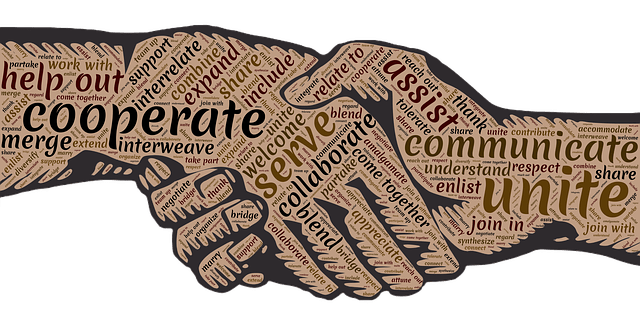
Procurement’s value starts from a user experience of a simple quick buy. If the dealing through requisition to receiving has shown to be easy and user-friendly, people are generally happy and more willing to collaborate when come to large strategic deals, and will be more incline to the values that Procurement is rendering. It is a holistic experience having their needs met that win the users. Both the tactical and strategic functions of Procurement are inseparable, and when one area is strong but the other weak, the overall image of Procurement is likely to be pulled down by the weak. Hence it is imperative that Procurement works to increase its usability through deploying the appropriate tools while gaining trust from the stakeholders.
Compare it to an e-commerce website, if the buying process proves to be tedious having lots of issues each time a customer logs in, it will have problem satisfying the customer’s need. Assuming the company is great in offering discount that is better than its competitors, but due to the pain that customer needs to go through in order to get a product, it is fairly unlikely for existing customers to be willing to return for subsequent buy.
Successful business collaboration, whether it is with inter-stakeholders or vendor partners, starts with meeting of the mind through effective communication on the requirements and objective, with both parties driving in the same direction, and each with his or her role to play to achieve it. By understanding what needs to be solved, and a collective approach of process to undertake, the collaboration is set to achieve its desired outcome.
Often, failure happens when parties have different understanding and with conflicting interest. When doubts arise, it is best to seek for clarification instead of making assumption. Assumption that is incorrectly made creates confusion and provokes mistrust between parties.
Conclusion
By and large, it is the excellent soft-skills and value support system from Procurement that help drives successful partnership, business sustainability, and higher profitability for the organization. More than acting as a conduit between inter-stakeholders and vendors, Procurement’s engagement through the innovation stage, partnership building, leadership in responsible sourcing to post-contract is pivotal to an organization’s success.
It is fair to say that digital transformation will allow Procurement to have more opportunity to flex its muscle on creative thinking and communication skill, that deepen stakeholders collaboration. It is enlivening to see how Procurement is evolving, and with great excitement to anticipate the changes that are expected to point to a larger benefit and wellbeing of both the economy and humanity.
Discover more from ANGELSNDOVES
Subscribe to get the latest posts sent to your email.

